NYT: 'After more than two months of daily protests, the demonstrations were quashed last month when the regional government ordered the security forces to occupy the central square. The security forces opened fire and detained protesters, actions that registered sharp rebukes from Amnesty International and Human Rights Watch.
The crackdown has presented an unexpected challenge to American diplomats who have relied on the region to be a stable counterpoint to the continued violence and political dysfunction that roils the rest of Iraq.
“Kurdistan is the only place in Iraq that the United States can be proud of,” said Airy Hirseen, a leader of the Kurdistan Democratic Party, which governs the region along with the Patriotic Union of Kurdistan.
Mr. Hirseen said that he had been in contact with American officials during the protests, and that they did not press the authorities to end their aggressive response.'
Showing posts with label Kurdistan. Show all posts
Showing posts with label Kurdistan. Show all posts
Thursday, May 19, 2011


Friday, April 01, 2011
Kurdish protest turns violent
"A peaceful protest turned violent in northern Iraq on Friday when hundreds of Kurdish protesters clashed with riot police, security officials there said.
Security officials said angry protesters stormed shops in central Sulaimaniya, threw stones at Kurdish riot police and wielded sticks when police pushed back. At least 50 people were wounded, including 37 members of the riot police, police and health officials in Sulaimaniya said."
Security officials said angry protesters stormed shops in central Sulaimaniya, threw stones at Kurdish riot police and wielded sticks when police pushed back. At least 50 people were wounded, including 37 members of the riot police, police and health officials in Sulaimaniya said."
Wednesday, February 23, 2011
Even Iraq's Kurds are sick of corruption
"There is no justice in the Kurdistan region. Most of the politicians have accumulated huge wealth due to the corruption," said one of the protesters, 25-year-old Hindrin Jabar, an unemployed college graduate. "The government keeps giving false promises with no action."
Sunday, February 20, 2011
TV station in Sulaimaniya burned down
"Gunmen burst into a Kurdish television station in northern Iraq on Sunday, shooting up equipment and setting fire to the building, apparently in retaliation for footage it aired earlier in the week of a deadly protest, station officials said.
Later Sunday, about 2,000 demonstrators took to the streets of this Kurdish city, 160 miles (260 kilometers) northeast of Baghdad, for a fourth consecutive day to demand political and economic reforms from the parties that control the region. Police and hospital officials said at least four people were injured — two of them by bullets — after Kurdish forces fired in the air to disperse the crowd.
The attack on the television station took place Sunday morning. Forty to 50 gunmen wearing military-style clothes stormed the network's headquarters in Sulaimaniyah, spokesman Farhang Hars said. Officials at the station suggested the raid was retaliation for broadcasting footage of a demonstration last week in which two people were killed. The station had only been on air for a few days."
Later Sunday, about 2,000 demonstrators took to the streets of this Kurdish city, 160 miles (260 kilometers) northeast of Baghdad, for a fourth consecutive day to demand political and economic reforms from the parties that control the region. Police and hospital officials said at least four people were injured — two of them by bullets — after Kurdish forces fired in the air to disperse the crowd.
The attack on the television station took place Sunday morning. Forty to 50 gunmen wearing military-style clothes stormed the network's headquarters in Sulaimaniyah, spokesman Farhang Hars said. Officials at the station suggested the raid was retaliation for broadcasting footage of a demonstration last week in which two people were killed. The station had only been on air for a few days."
Friday, January 07, 2011
Tuesday, December 28, 2010
Iraqi Kurds also angry about continued reparations to Kuwait
I don't blame them. "Kuwait has a GDP (PPP) of US$167.9 billion and a per capita income of US$81,800, making it the 5th richest country in the world."
'Iraqi Kurdistan will have to pay US$197 million annually from its oil revenues toward Iraq’s debt to Kuwait beginning from next year, according to a new bill currently before the Iraqi parliament.
Iraq still owes $22 billion of the approximately $53 billion which the United Nations (UN) ordered Iraq to pay Kuwait as compensation for war damages incurred during the Iraqi invasion of Kuwait in 1990.
...Sami Abdulla Atrushi, a member of the former Iraqi government’s Financial Committee, said the country’s debt requirements to Kuwait were an unfair burden on average Iraqis.
“It’s an injustice against Iraqis in general and Kurdish people in particular,” said Atrushi. “Neither the Iraqi people nor their current government…agree with the policies employed by the former [Ba’athist] regime [of Saddam Hussein], especially those against Kuwait.”
Atrushi said the Kurdish people were the “first victim” of Hussein’s policies, referring to the Ba’athist regime’s genocidal persecution of the Kurds, and that therefore the compensation requirements were especially inappropriate for Iraqi Kurds. '
'Iraqi Kurdistan will have to pay US$197 million annually from its oil revenues toward Iraq’s debt to Kuwait beginning from next year, according to a new bill currently before the Iraqi parliament.
Iraq still owes $22 billion of the approximately $53 billion which the United Nations (UN) ordered Iraq to pay Kuwait as compensation for war damages incurred during the Iraqi invasion of Kuwait in 1990.
...Sami Abdulla Atrushi, a member of the former Iraqi government’s Financial Committee, said the country’s debt requirements to Kuwait were an unfair burden on average Iraqis.
“It’s an injustice against Iraqis in general and Kurdish people in particular,” said Atrushi. “Neither the Iraqi people nor their current government…agree with the policies employed by the former [Ba’athist] regime [of Saddam Hussein], especially those against Kuwait.”
Atrushi said the Kurdish people were the “first victim” of Hussein’s policies, referring to the Ba’athist regime’s genocidal persecution of the Kurds, and that therefore the compensation requirements were especially inappropriate for Iraqi Kurds. '
Monday, November 22, 2010
Honor killings in Iraqi Kurdistan
I did not know until recently the scale of "honor killings" in Kurdistan. In this sad story, a man was killed by his wife's brother, because her family did not approve of the marriage.
"Honor killing has a long history in Iraq and here in the semiautonomous region of Kurdistan. But even here, this couple’s case stood out because the man was killed, not the woman, and because of the political clout of the warring families.
As some Iraqi lawmakers try to crack down on honor killing, the case — in which there have been no arrests — also illustrates how difficult it can be to uproot a deep-seated tribal honor code.
More than 12,000 women were killed in the name of honor in Kurdistan from 1991 to 2007, according to Aso Kamal of the Doaa Network Against Violence. Government figures are much lower, and show a decline in recent years, and Kurdish law has mandated since 2008 that an honor killing be treated like any other murder. But the practice continues, and the crime is often hidden or disguised to look like suicide."
"Honor killing has a long history in Iraq and here in the semiautonomous region of Kurdistan. But even here, this couple’s case stood out because the man was killed, not the woman, and because of the political clout of the warring families.
As some Iraqi lawmakers try to crack down on honor killing, the case — in which there have been no arrests — also illustrates how difficult it can be to uproot a deep-seated tribal honor code.
More than 12,000 women were killed in the name of honor in Kurdistan from 1991 to 2007, according to Aso Kamal of the Doaa Network Against Violence. Government figures are much lower, and show a decline in recent years, and Kurdish law has mandated since 2008 that an honor killing be treated like any other murder. But the practice continues, and the crime is often hidden or disguised to look like suicide."
Sunday, January 17, 2010
Ali Kimyawi to be hanged "within days"
'One of Saddam Hussein's most loathed henchman, Ali Hassan al-Majid, otherwise known as Chemical Ali, will be hanged within days, a senior official said tonight, setting the scene for Iraq's highest profile execution since Saddam himself was put to death more than three years ago.
The former spy chief and first cousin of Saddam was today sentenced to death for ordering the slaughter of more than 5,000 Kurds in the northern Iraqi town of Halabja with chemical weapons in 1988.
 It was the fourth death sentence the 68-year-old has received for atrocities committed during the brutal three-decade reign of the Ba'athists. Iraq's deputy justice minister, Busho Ibrahim, said Majid's execution was now imminent.
"We will receive Chemical Ali from the Americans in the next few days and he will be executed very soon afterwards," said Ibrahim. Majid was sentenced by Iraq's high criminal court. All remaining prosecutions he faces are now expected to be set aside.'
The former spy chief and first cousin of Saddam was today sentenced to death for ordering the slaughter of more than 5,000 Kurds in the northern Iraqi town of Halabja with chemical weapons in 1988.
 It was the fourth death sentence the 68-year-old has received for atrocities committed during the brutal three-decade reign of the Ba'athists. Iraq's deputy justice minister, Busho Ibrahim, said Majid's execution was now imminent.
"We will receive Chemical Ali from the Americans in the next few days and he will be executed very soon afterwards," said Ibrahim. Majid was sentenced by Iraq's high criminal court. All remaining prosecutions he faces are now expected to be set aside.'
Friday, August 14, 2009
Saddam's Terror in Kurdistan
The below video is for Haider Hamza, who as a 19 year old apparently believed (at 3 min) that Saddam did not gas the Kurds.
Thursday, April 09, 2009
Iraqi Kurds sue US companies that sold chemicals
to Saddam's regime, who used them to make chemical weaopns in the 1980s. The result was horrific.
Lawsuit: Firms sold poison gas ingredients to Iraq
By DAVID DISHNEAU
HAGERSTOWN, Md. (AP) — Three companies illegally sold materials to Saddam Hussein's regime in the 1980s for making chemical weapons that were used to carry out attacks against thousands of Iraqi Kurds and ultimately caused scores of chronic ailments, according to a federal lawsuit.
The complaint filed Tuesday in Baltimore by five Iraqi expatriates and the Nashville, Tenn.-based Kurdish National Congress seeks class certification for an estimated 100,000 Kurds. The Republic of Iraq is also named as a defendant.
continued
Lawsuit: Firms sold poison gas ingredients to Iraq
By DAVID DISHNEAU
HAGERSTOWN, Md. (AP) — Three companies illegally sold materials to Saddam Hussein's regime in the 1980s for making chemical weapons that were used to carry out attacks against thousands of Iraqi Kurds and ultimately caused scores of chronic ailments, according to a federal lawsuit.
The complaint filed Tuesday in Baltimore by five Iraqi expatriates and the Nashville, Tenn.-based Kurdish National Congress seeks class certification for an estimated 100,000 Kurds. The Republic of Iraq is also named as a defendant.
continued
Sunday, June 24, 2007
Chemical Ali at the end of his rope
Iraq's 'Chemical Ali' Sentenced to Hang
By SINAN SALAHEDDIN and OMAR SINAN
The Associated Press
Sunday, June 24, 2007; 4:22 PM
BAGHDAD -- Saddam Hussein's cousin, known as "Chemical Ali," and two other regime officials were sentenced Sunday to hang for slaughtering up to 180,000 Kurdish men, women and children with chemical weapons, artillery barrages and mass executions two decades ago.
Two other defendants were sentenced to life in prison for their roles in the 1987-1988 crackdown, known as "Operation Anfal." A sixth defendant was acquitted for lack of evidence. Death sentences are automatically appealed.
The most notorious defendant was Saddam's cousin Ali Hassan al-Majid, who gained his nickname for ordering the use of mustard gas and nerve agents against the Kurds in response to their collaboration with the Iranians during the 1980-1988 Iran-Iraq War.
Witnesses testified that Iraqi government forces indiscriminately attacked women and children, burned crops, killed livestock and rounded up civilians into detention camps in a campaign to exterminate the restive Kurdish minority.

The defendants insisted they were defending the nation against Kurdish guerrillas who had sided with Iran during the bloody eight-year war.
Al-Majid, once among the most powerful and feared men in Iraq, trembled in silence as Judge Mohammed Oreibi al-Khalifa read the verdict against him and imposed five death sentences for genocide, war crimes and crimes against humanity.
"You had all the civil and military authority for northern Iraq," al-Khalifa said. "You gave the orders to the troops to kill Kurdish civilians and put them in severe conditions. You subjected them to wide and systematic attacks using chemical weapons and artillery. You led the killing of Iraqi villagers. You restricted them in their areas, burned their orchards, killed their animals. You committed genocide."
Al-Majid said "Thanks be to God" as he was led from the courtroom.
Also sentenced to death were Sultan Hashim Ahmad al-Tai, the former defense minister who led the Iraqi delegation at the cease-fire talks that ended the 1991 Gulf War, and Hussein Rashid Mohammed, a former deputy director of operations for the Iraqi armed forces.
Mohammed interrupted the judge as the verdict was read, insisting the defendants were defending Iraq from Kurdish rebels who collaborated with Iran.
"God bless our martyrs. Long live the brave Iraqi army. Long live Iraq. Long live the Baath party and long live Arab nations," he said.
By SINAN SALAHEDDIN and OMAR SINAN
The Associated Press
Sunday, June 24, 2007; 4:22 PM
BAGHDAD -- Saddam Hussein's cousin, known as "Chemical Ali," and two other regime officials were sentenced Sunday to hang for slaughtering up to 180,000 Kurdish men, women and children with chemical weapons, artillery barrages and mass executions two decades ago.
Two other defendants were sentenced to life in prison for their roles in the 1987-1988 crackdown, known as "Operation Anfal." A sixth defendant was acquitted for lack of evidence. Death sentences are automatically appealed.
The most notorious defendant was Saddam's cousin Ali Hassan al-Majid, who gained his nickname for ordering the use of mustard gas and nerve agents against the Kurds in response to their collaboration with the Iranians during the 1980-1988 Iran-Iraq War.
Witnesses testified that Iraqi government forces indiscriminately attacked women and children, burned crops, killed livestock and rounded up civilians into detention camps in a campaign to exterminate the restive Kurdish minority.

Rubbar Mohammed visits the grave of her family members who were killed in a chemical attack by Saddam Hussein's forces in 1998, in Halabja, Iraq, Sunday, June 24, 2007 . Ali Hassan al-Majid, also known as Chemical Ali, Saddam Hussein's cousin and the former head of the Baath Party's Northern Bureau Command, and two other former regime officials were sentenced to death by hanging for their roles in a 1980s scorched-earth campaign that led to the deaths of 180,000 Kurds, by an Iraqi court in Baghdad Sunday. (AP Photo/Yahya Ahmed)
The defendants insisted they were defending the nation against Kurdish guerrillas who had sided with Iran during the bloody eight-year war.
Al-Majid, once among the most powerful and feared men in Iraq, trembled in silence as Judge Mohammed Oreibi al-Khalifa read the verdict against him and imposed five death sentences for genocide, war crimes and crimes against humanity.
"You had all the civil and military authority for northern Iraq," al-Khalifa said. "You gave the orders to the troops to kill Kurdish civilians and put them in severe conditions. You subjected them to wide and systematic attacks using chemical weapons and artillery. You led the killing of Iraqi villagers. You restricted them in their areas, burned their orchards, killed their animals. You committed genocide."
Al-Majid said "Thanks be to God" as he was led from the courtroom.
Also sentenced to death were Sultan Hashim Ahmad al-Tai, the former defense minister who led the Iraqi delegation at the cease-fire talks that ended the 1991 Gulf War, and Hussein Rashid Mohammed, a former deputy director of operations for the Iraqi armed forces.
Mohammed interrupted the judge as the verdict was read, insisting the defendants were defending Iraq from Kurdish rebels who collaborated with Iran.
"God bless our martyrs. Long live the brave Iraqi army. Long live Iraq. Long live the Baath party and long live Arab nations," he said.
Wednesday, January 10, 2007
Anfal was a 'legitimate military operation'
Defendants have said Anfal was a legitimate military operation targeting Kurdish guerrillas who had sided with Shiite Iran during the last stages of the Iraq-Iran war.
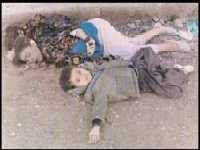
Some photos of the Kurdish guerillas:




Some photos of the Kurdish guerillas:


Sunday, October 29, 2006
Memories of an Iraqi American
1982 - 1990
When we returned to the US in 1982 we were very poor, and my parents struggled to pay the bills and keep moving forward, but they were always able to put food on the table. In 1983 we got Green Cards, and both my parents began working legally. Eventually they found jobs worthy of their education, and they were able to buy a house in 1985. After we moved into that house our situation began to improve. I started high school, and it was there when I realized for the first time that my experience in Iraq was a good thing. The last two years I spent in Iraq toughened me - I learned how short and unfair life can be. I learned that sometimes, hot water is simply not available - sometimes even cold water is not available! We spent many nights studying by lantern in Iraq. I spent 7th grade studying everything in Arabic, except English of course. I was very good at English, and pretty good at math, but I had trouble reading Arabic. History was a difficult subject. My parents helped, but it took me a LONG time to get through a few pages in Arabic.
I learned how to study hard, and when I started school in the US, I did fairly well because it was easier than school in Iraq. With my dad's help, I did well academically in high school. In 1986 my parents and I were invited to a ceremony at which students were recognized for their academic achievements. During the ceremony, my father told my mother that his best friend in Iraq (the Sunni Arab from Samarra) had been murdered earlier that year by the regime. I was shocked to hear this news, and my mother held back tears. My father was sad, but not surprised. His friend - our friend - was, kind, intelligent, and most gracious. He never abused his power and remained loyal to his friends. He was a wonderful father - I had a crush on his daughter.
In 1988 I started college, and the Iran-Iraq war finally ended. That year I saw a 60 Minutes report about Hallabja - for the first time the mainstream media in the US began to take a close look at the crimes of Saddam's regime. I was horrified by what Saddam's regime did to those poor people. That's when I began to think that the Kurds must have their own country. Despite the negative attention paid by the media to Iraq, it seemed as though things were looking up for Iraqis in the late 80s. The war had ended, and Iraqis were beginning to return to normal life. One of my cousins in Baghdad set up an airconditioning business with the help of an American company - apparently working with the Americans was not such a big deal back then - he did very well for himself.
In 1990, we became US citizens. One month later, Iraq invaded Kuwait.
When we returned to the US in 1982 we were very poor, and my parents struggled to pay the bills and keep moving forward, but they were always able to put food on the table. In 1983 we got Green Cards, and both my parents began working legally. Eventually they found jobs worthy of their education, and they were able to buy a house in 1985. After we moved into that house our situation began to improve. I started high school, and it was there when I realized for the first time that my experience in Iraq was a good thing. The last two years I spent in Iraq toughened me - I learned how short and unfair life can be. I learned that sometimes, hot water is simply not available - sometimes even cold water is not available! We spent many nights studying by lantern in Iraq. I spent 7th grade studying everything in Arabic, except English of course. I was very good at English, and pretty good at math, but I had trouble reading Arabic. History was a difficult subject. My parents helped, but it took me a LONG time to get through a few pages in Arabic.
I learned how to study hard, and when I started school in the US, I did fairly well because it was easier than school in Iraq. With my dad's help, I did well academically in high school. In 1986 my parents and I were invited to a ceremony at which students were recognized for their academic achievements. During the ceremony, my father told my mother that his best friend in Iraq (the Sunni Arab from Samarra) had been murdered earlier that year by the regime. I was shocked to hear this news, and my mother held back tears. My father was sad, but not surprised. His friend - our friend - was, kind, intelligent, and most gracious. He never abused his power and remained loyal to his friends. He was a wonderful father - I had a crush on his daughter.
In 1988 I started college, and the Iran-Iraq war finally ended. That year I saw a 60 Minutes report about Hallabja - for the first time the mainstream media in the US began to take a close look at the crimes of Saddam's regime. I was horrified by what Saddam's regime did to those poor people. That's when I began to think that the Kurds must have their own country. Despite the negative attention paid by the media to Iraq, it seemed as though things were looking up for Iraqis in the late 80s. The war had ended, and Iraqis were beginning to return to normal life. One of my cousins in Baghdad set up an airconditioning business with the help of an American company - apparently working with the Americans was not such a big deal back then - he did very well for himself.
In 1990, we became US citizens. One month later, Iraq invaded Kuwait.
Subscribe to:
Posts
(
Atom
)