Al Jazeera reporter Abderrahim Foukara asks former Secretary of Defense Donald Rumsfeld if he made adequate preparations for the invasion of Iraq to avoid tens of thousands of deaths of innocent Iraqis. As if Arabs really cared about the deaths of innocent Iraqis! But it is a good question, and obviously the answer is no.
Also interesting is the charge that it is in Foukara's "nature" to be pejorative. It is not in the Arab "nature" to be pejorative. It is in the Arab nature to be a hypocrite. LOL
Showing posts with label Rumsfeld. Show all posts
Showing posts with label Rumsfeld. Show all posts
Wednesday, October 05, 2011


Thursday, February 03, 2011
Rumsfeld writes a book
'Rumsfeld, who has kept a low profile since resigning in 2006, uses the book to renew his long-running feud with McCain, whom he describes as having a "hair-trigger temper" and "a propensity to shift his positions to appeal to the media".
Rumsfeld accepts almost no blame for the mistakes in Iraq in his 800-page autobiography Known and Unknown, copies of which have been obtained and published in excerpt by the New York Times and the Washington Post.
Instead, he fingers the US diplomat in charge of postwar Iraq, Paul Bremer, and criticises the former secretary of state, Colin Powell, and the former national security adviser, Condoleezza Rice.
McCain told ABC television: "I respect secretary Rumsfeld. He and I had a very, very strong difference of opinion about the strategy he was employing in Iraq, which I predicted was doomed to failure. Thank God he was relieved of his duties and we put the surge in. Otherwise we would have had a disastrous defeat in Iraq."
In the book Rumsfeld argues the Middle East would be "far more perilous than it is today" if Saddam Hussein had remained in power.
He denies he made a mistake in not sending a bigger US force to Iraq in 2003. Senior US commanders were reported at the time to have argued that the force was too small, a view apparently vindicated by the subsequent failure of American forces to stop postwar violence and looting.'
Thursday, October 18, 2007
Tuesday, April 17, 2007
Wednesday, November 08, 2006
Saddam and Rumsfeld
So Saddam and two of his filthy henchmen were sentenced to death on Sunday. It wasn't surprising, and I do believe that justice will be served by their hanging, but it wasn't entirely joyful either. Personally I would have liked to see a sentence of life in prison handed to them, as death, in my opinion, is an easy way out, but many Iraqis, including my parents, worry that a life sentence would only encourage Saddam's supporters to continue fighting, with the hope of eventually freeing their beloved leader.
It would have been much better for Iraq, for the entire world, if this trial had taken place in the 1990s. 'If Saddam Hussein had been sentenced to death 10 years ago, Zaki Alherz, an Iraqi-American engineer living in Fremont, would have been overjoyed. But when Alherz turned on his computer Sunday morning and read that his dream had finally come true, he just kept sipping his coffee, unable to even crack a smile. "It's kind of a sour triumph," said Alherz, a Shiite Muslim, who said his cousins were killed by Hussein's security forces. "Yes, it's great that Saddam Hussein is removed," he said. "On the other hand, though, the country isn't in any better shape than it was. It might even be worse." Other Iraqi bloggers have expressed similar feelings. Zeyad (Healing Iraq) wrote a good post (although I don't agree that Maliki should be tried) and also compiled opinions of other Iraqi bloggers. In his post Zeyad linked to a video of the courtroom verdict - Saddam yelled "Allah w'akbar" over and over as the judge read the sentence. It's ironic that Saddam, whose regime killed so many Muslims, would yell "Allah w'akbar" and clutch a Quran while being sentenced to death for murdering only God knows how many tens of thousands of Muslims. I hope that Zeyad doesn't mind that I mention that he is a Sunni Arab - many Iraqi Sunni Arabs agreed with the verdict, or at least agreed that Saddam was guilty of crimes against humanity. However, I am not surprised by the Sunni Arabs (most of them non-Iraqi) who glorify Saddam - many of them benefited from his rule. Although I expected many Sunni Arabs to defend Saddam, I am still shocked when I hear or read a seemingly educated westerner commending Saddam, and Alaa (the Mesopotamian) wrote a short post entitled 'In Praise of Tyranny' and linked to an embarrassing Guardian article that praises Saddam.
The Iraqi nation is still in bad shape, Iraqis say, and many Iraqis believe that life in Iraq was better for them before 2003. But who doubts that that the primary goal of the insurgency has been to make life for Iraqis much worse than life under Saddam's rule? The insurgency, also known by many people as the 'resistance' (they should resist the urge to murder innocents), does not want democracy in Iraq - they want to see the new Iraq fail. One of my cousins told me before the invasion that he was afraid that Saddam's regime would burn the country and poison the rivers before giving up power. It seems that he was right, even though the Baathists are no longer in power. They don't need to be in power to cause mayhem. I believe that if Saddam and his thugs have any influence over the insurgency, the Iraqi government should make them an offer: accept life in prison and encourage the insurgency to stop killing people. Perhaps this offer has already been made, as Saddam today called on Iraqis to reconcile. For the first time in my life, I agree with Saddam.
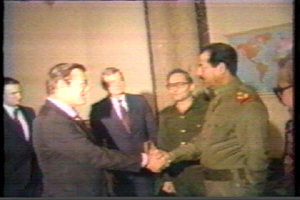
In other news, Secretary of Defense Donald Rumsfeld resigned today. His resignation, like Saddam's verdict, was also overdue in my opinion. I was dismayed by Rumsfeld's decision to use cluster bombs over civilian areas and heavily bomb the people who hated Saddam and cause so much destruction and death there. Thousands of Shia have been maimed. I am no military expert, but I do not understand why cluster bombs are used in civilian areas. Furthermore, I can't help but wonder if Saddam would have been so powerful had he not received so much support from Reagan's administration, for which Rumsfeld worked as special envoy to the Mideast. Rumsfeld visited Iraq in 1983 and shook Saddam's hand, presumably to discuss the sale of US-made weapons to Iraq and how to use them effectively against America's nemesis at the time. Of course Saddam's regime did not use them only against Iran. This is what I love about America: I can write these things without fearing that the FBI or CIA will send somebody to apprehend me and my family in the middle of the night and take us to prison where they might torture me in front of my family.
It would have been much better for Iraq, for the entire world, if this trial had taken place in the 1990s. 'If Saddam Hussein had been sentenced to death 10 years ago, Zaki Alherz, an Iraqi-American engineer living in Fremont, would have been overjoyed. But when Alherz turned on his computer Sunday morning and read that his dream had finally come true, he just kept sipping his coffee, unable to even crack a smile. "It's kind of a sour triumph," said Alherz, a Shiite Muslim, who said his cousins were killed by Hussein's security forces. "Yes, it's great that Saddam Hussein is removed," he said. "On the other hand, though, the country isn't in any better shape than it was. It might even be worse." Other Iraqi bloggers have expressed similar feelings. Zeyad (Healing Iraq) wrote a good post (although I don't agree that Maliki should be tried) and also compiled opinions of other Iraqi bloggers. In his post Zeyad linked to a video of the courtroom verdict - Saddam yelled "Allah w'akbar" over and over as the judge read the sentence. It's ironic that Saddam, whose regime killed so many Muslims, would yell "Allah w'akbar" and clutch a Quran while being sentenced to death for murdering only God knows how many tens of thousands of Muslims. I hope that Zeyad doesn't mind that I mention that he is a Sunni Arab - many Iraqi Sunni Arabs agreed with the verdict, or at least agreed that Saddam was guilty of crimes against humanity. However, I am not surprised by the Sunni Arabs (most of them non-Iraqi) who glorify Saddam - many of them benefited from his rule. Although I expected many Sunni Arabs to defend Saddam, I am still shocked when I hear or read a seemingly educated westerner commending Saddam, and Alaa (the Mesopotamian) wrote a short post entitled 'In Praise of Tyranny' and linked to an embarrassing Guardian article that praises Saddam.
The Iraqi nation is still in bad shape, Iraqis say, and many Iraqis believe that life in Iraq was better for them before 2003. But who doubts that that the primary goal of the insurgency has been to make life for Iraqis much worse than life under Saddam's rule? The insurgency, also known by many people as the 'resistance' (they should resist the urge to murder innocents), does not want democracy in Iraq - they want to see the new Iraq fail. One of my cousins told me before the invasion that he was afraid that Saddam's regime would burn the country and poison the rivers before giving up power. It seems that he was right, even though the Baathists are no longer in power. They don't need to be in power to cause mayhem. I believe that if Saddam and his thugs have any influence over the insurgency, the Iraqi government should make them an offer: accept life in prison and encourage the insurgency to stop killing people. Perhaps this offer has already been made, as Saddam today called on Iraqis to reconcile. For the first time in my life, I agree with Saddam.
In other news, Secretary of Defense Donald Rumsfeld resigned today. His resignation, like Saddam's verdict, was also overdue in my opinion. I was dismayed by Rumsfeld's decision to use cluster bombs over civilian areas and heavily bomb the people who hated Saddam and cause so much destruction and death there. Thousands of Shia have been maimed. I am no military expert, but I do not understand why cluster bombs are used in civilian areas. Furthermore, I can't help but wonder if Saddam would have been so powerful had he not received so much support from Reagan's administration, for which Rumsfeld worked as special envoy to the Mideast. Rumsfeld visited Iraq in 1983 and shook Saddam's hand, presumably to discuss the sale of US-made weapons to Iraq and how to use them effectively against America's nemesis at the time. Of course Saddam's regime did not use them only against Iran. This is what I love about America: I can write these things without fearing that the FBI or CIA will send somebody to apprehend me and my family in the middle of the night and take us to prison where they might torture me in front of my family.

Subscribe to:
Posts
(
Atom
)